
Gambella Vision | Special Report
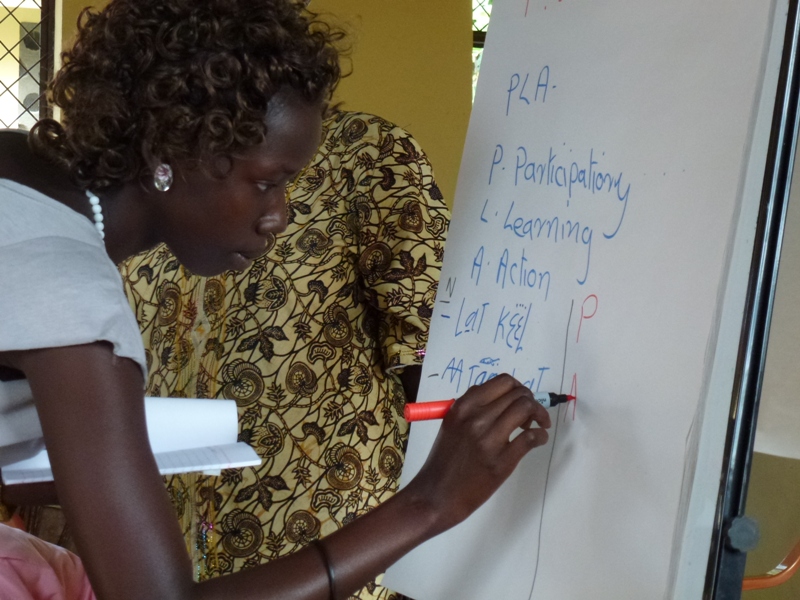
Gambella woman at the workshop training her colleagues
For years, education has been presented as one of the foundations of development and a pathway through which Gambella’s children can build a different future.
Yet, across the region, concerns about school infrastructure, overcrowded classrooms, shortages of learning materials, teacher qualifications, unequal educational opportunities and interrupted schooling have continued to feature in government statistics, humanitarian reports and academic studies.
A review of publicly available evidence from 2016 to 2026 reveals that many of these challenges were documented long before the latest waves of insecurity and displacement. The central question is no longer whether Gambella faces serious educational difficulties, but how much progress has been made in addressing problems that have repeatedly been identified over the past decade.
A UNICEF situation analysis of children and women in Gambella, drawing on education statistics from the 2015/16 to 2018/19 academic years, identified weaknesses in school progression, learning outcomes and access to secondary education.
The report found that only 49 per cent of pupils in the region in 2016/17 survived to Grade 5, meaning that more than half did not complete the first cycle of primary education within the measure used. It also recorded that 17 per cent of Grade 8 students failed their final examination in 2015/16, above the national average of 12 per cent.
The primary school dropout rate was reported at 6.4 per cent in 2017/18. These figures provided an early warning about the difficulties children faced in remaining in school and progressing through the education system.
The same UNICEF assessment highlighted significant inequalities between boys and girls, particularly at secondary level. In 2018/19, the gender parity index in Gambella’s secondary education stood at 0.73, indicating a substantial gap in enrolment between girls and boys.
The report also found that the net enrolment ratio was 25 per cent for Grades 9 and 10 and only 6 per cent for Grades 11 and 12. It further identified low pre-primary enrolment, delayed progression through school, flooding, long distances to educational institutions, insecurity and limited family resources as factors affecting children’s participation.
For girls, early marriage and household economic pressures were among the challenges identified. The findings demonstrated that access to education was not simply a matter of having schools available; children also needed the conditions and support required to remain in education.
Concerns about classroom conditions were also documented in refugee-hosting communities. In October 2019, the UNESCO International Institute for Educational Planning reported severe overcrowding at a primary school in Kule refugee camp, where a head teacher described classes containing approximately 164 students.
The school operated double shifts because available classroom space could not accommodate all pupils at once. The report also highlighted challenges faced by refugee teachers, including professional qualifications and the need for additional training. The situation illustrated the pressure placed on educational facilities in areas hosting large refugee populations, while also demonstrating how classroom congestion affects teachers’ ability to manage lessons and support individual students.
More recent accounts suggest that overcrowding and shortages of basic learning materials remain serious concerns. In July 2025, UNICEF published a report titled Big Dreams: Learning against the odds in displacement and poverty, documenting the experiences of children attending Wibur Primary and Secondary School in Gambella.
One pupil described sitting on the ground because classrooms lacked sufficient desks, sharing a classroom with more than 80 students under one teacher and using worn-out learning materials. The school’s principal told UNICEF that the institution had more than 2,700 students but only 68 teachers, including those serving kindergarten.
She also described leaking classrooms, inadequate sanitation facilities and the absence of sufficient learning resources. UNICEF said internally displaced and refugee children were among those struggling to access education, while children from host communities faced similar challenges. The account offered a direct illustration of how shortages of teachers, classrooms and educational materials affect the daily learning experience of children.
The Federal Ministry of Education’s 2024/25 Education Statistics Annual Abstract provides further evidence of the challenges facing the region. According to the ministry’s reported figures, Gambella recorded a pupil-to-section ratio of 76 in secondary schools, compared with the national figure of 53.
A section is a classroom group, meaning the indicator points to substantial pressure on available secondary-school learning spaces. The same abstract reported that only 0.2 English textbooks and 0.3 mathematics textbooks were available per pupil in primary schools in Gambella, while the corresponding middle-school ratios were 0.2 for both subjects. These figures indicate that the supply of textbooks in key subjects remains limited relative to the number of students.
The report also recorded that 68 per cent of primary and middle school teachers met the applicable qualification requirements, while the corresponding figure for secondary-school teachers was 68.1 per cent. The ministry’s qualification categories and standards have changed over time, so these figures should not be directly compared with older teacher-qualification statistics without accounting for those changes.
The figures also point to a distinction between enrolment and the actual quality of education. A child may be registered in school, but that does not necessarily mean the child has access to a suitable classroom, enough textbooks, a qualified teacher or the support needed to learn effectively.
A school may report hundreds or thousands of enrolled pupils while operating with limited teaching staff and insufficient facilities. The pupil-to-section ratio in Gambella’s secondary schools, together with the reported textbook shortages, raises questions about whether existing educational infrastructure and resources are keeping pace with the number of students.
It also highlights the importance of examining learning outcomes, attendance, completion rates and the availability of qualified teachers rather than relying on enrolment figures alone.
The crisis has also been intensified by insecurity and displacement. In January 2026, a report published by Addis Standard and carried by AllAfrica said government schools in parts of Gambella City, Itang, Tharpam, Kule and Abol remained closed because classrooms were being used as temporary shelters for internally displaced people.
A regional official, speaking anonymously because of security concerns, said that many schools had not reopened as previously announced, while only a limited number of private schools had resumed classes.
The report described how displacement and damage to homes had disrupted public services and prevented the normal resumption of schooling. When classrooms become shelters because families have nowhere else to go, children lose access to education at the same time that they are coping with displacement and uncertainty.
The impact of funding shortages on refugee education has also been documented. The United Nations’ Global Humanitarian Overview 2025 reported that three secondary schools in Gambella’s refugee-hosting areas were closed between December 2023 and March 2024 because humanitarian partners could not meet the costs of teacher salaries and school materials.
The closures affected 6,377 children. This illustrates how the continuity of education in refugee-hosting areas can be affected by the availability of humanitarian funding, particularly where schools depend on external support to pay teachers and provide basic learning materials.
It also raises concerns about the sustainability of educational services for refugee children and the pressure placed on host-community institutions when support becomes insufficient.
There have also been attempts to address some of the region’s longstanding educational infrastructure challenges. In May 2025, Gambella Vision reported that the foundation stone had been laid for a project involving two model secondary schools and one boarding school, with support from the Ministry of Education.
The initiative was presented by regional and federal officials as an effort to address classroom deficiencies, overcrowding and shortages of learning materials. The schools were expected to be completed within a year, according to the announcement. However, the announcement of a project is not the same as its completion or operational delivery.
The status of construction, the availability of equipment and teachers, and the date students will actually begin using the facilities are important questions that require follow-up.
Beyond infrastructure, the quality of teaching and the availability of qualified educators remain central to the debate. The 2024/25 Ministry of Education statistics show that a significant proportion of teachers in Gambella did not meet the qualification requirements applied to their respective levels.
This does not mean that every teacher outside the reported qualification category is incapable of teaching, but it does point to a need for stronger professional development, training and teacher support. The issue is particularly important in primary and middle schools, where children acquire the foundational literacy, numeracy and language skills that influence their performance throughout their education.
Without sufficient instructional materials and opportunities for professional development, teachers face additional difficulties in delivering the curriculum and supporting students with different learning needs.
The challenge of mother-tongue instruction also deserves attention. A study published in 2025 on the use of indigenous languages as a medium of instruction in Gambella’s public primary schools identified shortages of instructional materials, inadequate teacher training and limited professional development as obstacles to effective implementation.
Language is a critical part of early learning, particularly for children who begin school speaking a language different from the one used in classroom instruction. The availability of textbooks and teaching materials in the languages used by local communities, together with teachers who are properly prepared to deliver lessons, is therefore an important part of improving educational quality.
The cumulative evidence raises questions about planning, resource allocation and accountability across the education sector. How many government schools in Gambella currently have sufficient classrooms, desks, toilets and clean water? How many students are assigned to each teacher and each classroom in primary and secondary schools?
How many teachers are properly qualified for the levels and subjects they teach? How many children leave school before completing primary education, and how many girls continue to face barriers as they move into secondary education? What has happened to the model schools announced in 2025, and how much progress has been made in addressing textbook shortages?
These questions require clear answers supported by current data from the Regional Education Bureau and individual woreda education offices.
A decade of reports should also prompt a closer examination of how education budgets are planned and spent. School construction alone cannot resolve the challenges facing the region if new facilities are not accompanied by sufficient teachers, textbooks, furniture, sanitation services, electricity and sustainable operating budgets.
Similarly, distributing learning materials without ensuring that schools have enough qualified teachers and manageable class sizes cannot guarantee improved learning outcomes. Education requires sustained investment, transparent monitoring and coordination between regional authorities, federal institutions, development partners, school administrations and communities.
For Gambella’s children, the consequences of these challenges extend beyond the classroom. Limited access to quality education can reduce opportunities for further study, professional training and employment. Children who repeatedly miss classes, struggle to acquire basic skills or leave school prematurely may face greater difficulties competing for opportunities later in life.
In a region where young people already confront unemployment, poverty and limited economic opportunities, weaknesses in the education system risk reinforcing the same disadvantages that affect the next generation. The cost is not borne only by individual students; it affects families, communities and the region’s long-term development.
The evidence from 2016 to 2026 does not suggest that nothing has changed. The number of schools expanded during earlier years, investments have been announced, classrooms have been constructed in refugee-hosting areas, and programmes have sought to improve teacher training and access to education.
But these interventions must be measured against the conditions children and teachers experience today. The persistence of overcrowded classrooms, shortages of textbooks, qualification gaps, funding-related school closures and interruptions caused by displacement shows why progress must be assessed through actual learning conditions and outcomes, not announcements alone.
Gambella cannot secure a stronger future while large numbers of its children struggle to obtain the basic conditions required for learning. The region needs a transparent assessment of its schools, teachers, classrooms, educational materials, budgets and learning outcomes, supported by publicly accessible data and measurable commitments.
The Regional Education Bureau and relevant authorities should explain what has been achieved, where the largest gaps remain and what concrete steps are being taken to address them. After a decade of warnings, the question facing Gambella is whether the next generation will inherit an education system capable of preparing them for the future, or continue to face the same obstacles that have been documented for years.
This article is authored by Pam Chuol Joack, a scholar and a contributor of Gambella Vision specialising in Gambella Affairs.
Gambella Vision