


A prolonged shortage of reliable rainfall is putting increasing pressure on livelihoods across Ethiopia’s Nuer Zone, where large numbers of households Nuer
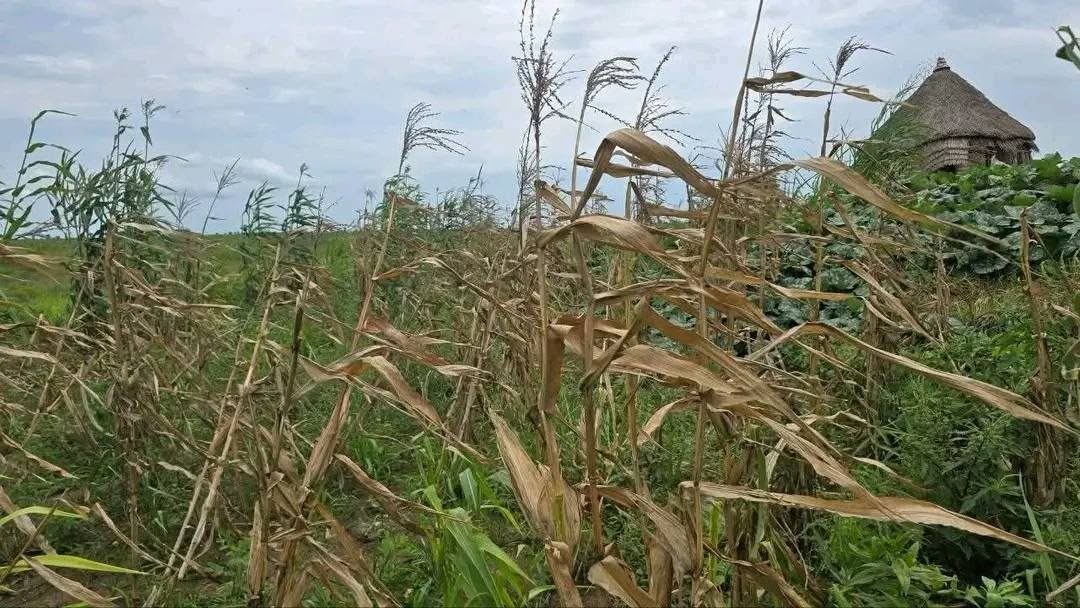
Nuer Zone Drought
depend primarily on agriculture and livestock for food, income and economic survival.
The emerging drought situation is being driven by below-average and increasingly erratic rainfall, creating difficult conditions for communities whose livelihoods are closely tied to seasonal weNuerather patterns. The absence of dependable rainfall is raising concerns about agricultural production, livestock conditions, household income and food availability.
For farming communities, rainfall is not simply a seasonal expectation; it is the foundation of food production and household livelihoods. When rains fail or arrive irregularly, farmers face difficulties establishing and maintaining crops, while reduced moisture can limit yields even where planting has taken place.
The consequences can extend well beyond the farm. Lower crop production means fewer food stocks for households and less produce available for local markets. If the decline continues, communities could face increasing dependence on purchased food at a time when household incomes are also under pressure.
This creates a potentially dangerous cycle: reduced agricultural production can decrease household income, while declining market supplies can contribute to higher food prices. Families then have to spend more to obtain basic food commodities, leaving less money available for other essential needs.
The pressure is particularly significant in communities where farming and livestock production provide the principal sources of livelihood. Unlike households with diversified income sources, families dependent on climate-sensitive activities have limited options when rainfall conditions deteriorate.
Livestock owners are also exposed to the effects of prolonged dry conditions. Reduced rainfall can affect the availability of pasture and water, creating additional pressure on livestock-dependent households. Any deterioration in animal conditions can directly affect household income, food consumption and the ability of families to meet basic expenses. The drought threat therefore needs to be viewed as a broader livelihood crisis rather than solely as a shortage of rainfall.
Agricultural losses can have consequences throughout the local economy. Farmers who harvest less produce have fewer commodities to sell, while traders may encounter reduced supplies. Consumers, meanwhile, can face higher prices as the balance between supply and demand changes.
For low-income households, even relatively modest increases in food prices can have serious consequences. Families may be forced to reduce the quantity or quality of food they purchase, sell productive assets, reduce spending on essential services or seek alternative sources of income.
If dry conditions persist, these coping mechanisms could become increasingly difficult to sustain.
The situation also raises concerns about the next agricultural cycle. Farmers who experience production losses may have fewer resources to purchase seeds, prepare land or invest in other agricultural inputs. This can create a second-round effect in which one poor season undermines the capacity to recover during the following season.
The same concern applies to livestock keepers. When pasture and water become scarce, livestock owners may be compelled to move animals farther in search of resources, increasing the pressure on families and potentially creating additional livelihood and social challenges.
The potential food-security consequences are therefore significant. Reduced local production could increase household dependence on markets, while higher prices could simultaneously make food less affordable. The most vulnerable households would likely be the first to feel the impact, particularly those with limited income, few productive assets and little capacity to absorb economic shocks.
The developing situation calls for timely assessment rather than waiting until the effects become a full-scale emergency.
Local authorities and humanitarian and development organizations need reliable information on rainfall conditions, crop performance, livestock health, water availability, market prices and household food access. Such information would help determine whether the situation is deteriorating and where intervention is most urgently required.
Water access should remain a key area of attention. Where water sources become inadequate, communities and livestock face additional pressure, potentially accelerating the loss of livelihoods.
Agricultural support could also become important if farmers are facing repeated production losses. Appropriate agricultural inputs, technical support and livelihood-recovery measures could help vulnerable households protect their productive capacity and reduce the long-term effects of the drought.
Livestock interventions may likewise be necessary if grazing and water conditions continue to worsen. Protecting productive animals can be critical for households whose economic survival depends on livestock ownership.
Food markets should also receive close attention. Monitoring the prices and availability of essential commodities can provide an early indication of whether declining local production is beginning to affect household food access.
The central concern is that drought does not always produce its greatest damage immediately. Its effects can accumulate gradually, first through declining rainfall, then reduced production, followed by falling household income, rising food prices and eventually worsening food insecurity.
That progression makes early action particularly important.
The Nuer Zone has communities whose livelihoods are heavily dependent on agriculture and pastoralism. When rainfall becomes unreliable, the consequences are felt simultaneously in fields, grazing areas, household incomes and local markets.
The current conditions should therefore be treated as a serious warning.
Without timely assessment and appropriate support, continued rainfall shortages could deepen livelihood losses and increase pressure on already vulnerable households. The immediate challenge is to understand the scale of the impact and prevent a difficult agricultural season from developing into a broader food-security crisis.
For communities already confronting limited livelihood alternatives, the question is no longer simply whether the rains have been insufficient. The larger question is how long households can withstand declining production, shrinking income and rising food costs. The answer will depend partly on how quickly the emerging risks are assessed and how effectively authorities, communities and humanitarian and development partners respond.
The Nuer Zone now faces a critical period in which early intervention could make the difference between manageable livelihood stress and a much deeper food-security crisis.
Gambella VisionNuer