


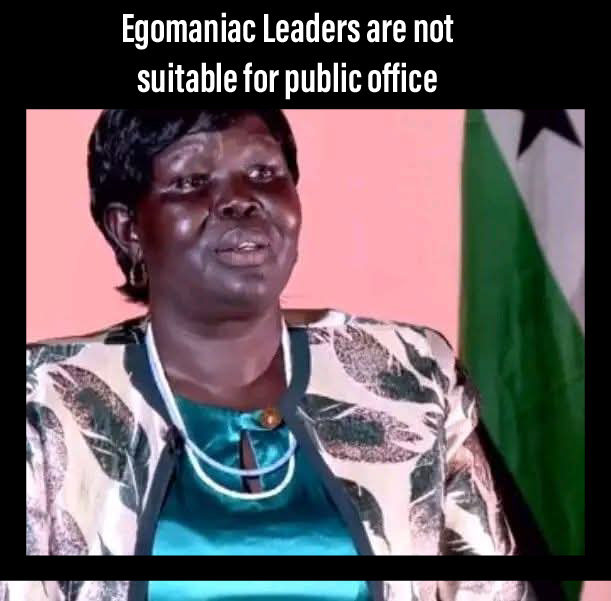
Egomaniac Leader Gambella Ever Had
Two Years After Promising “No More Bloodshed,” Gambella Faces More Than 100 Deaths in Communal Violence, Bus Attacks and Daylight Shootings.
Independent Report: The Growing Gap Between President Alemitu Umod’s 2024 Peace Promise and Gambella’s Continuing Security Crisis.
On August 12, 2024, Alemitu Umod assumed the presidency of the Gambella Regional State Government at a time when the region was emerging from a prolonged period of deadly inter-communal conflict during the administration of former President Omot Ojullu and former Vice President Thankuey Joack.
The prolonged conflict had left communities deeply divided and had generated widespread concerns over killings, insecurity, displacement, destruction of property and the inability of civilians to move freely without fear.
The removal of the previous leadership therefore created a significant political transition in Gambella. For many residents, the change was not simply about replacing one group of officials with another.
It created an expectation that the incoming administration would take a fundamentally different approach to peace, security, governance and reconciliation.
Her appointment was widely viewed as an opportunity for a political and security reset after nearly two years of violence under the previous administration.
For many Gambella residents, the change in leadership created renewed hope that the government would restore peace, strengthen security and protect civilians. President Alemitu appeared to recognize those expectations when she took office.
In a statement carried by state media shortly after assuming power, she gave the public a strong assurance that bloodshed would no longer continue in Gambelsta
For communities exhausted by killings, displacement, destruction and fear, the message was more than an ordinary political statement. It was understood as a promise that the new administration would fundamentally change the region’s security situation.
But nearly two years later, the security picture reported from different parts of Gambella raises serious questions about whether that promise has been fulfilled.
Figures cited for this report indicate that more than 100 people have reportedly been killed in subsequent incidents involving inter-communal violence, armed attacks and other security-related incidents.
The reported violence has also included attacks on passenger vehicles and government vehicles, with the number of reported vehicle attacks exceeding five. Gambella City, the regional capital and seat of government, has additionally witnessed repeated reports of shootings and other violent incidents occurring during daylight hours.
These developments have created a sharp contrast between the expectations generated by the president’s 2024 promise and the security experiences reported by residents.
The issue, however, requires careful examination because Gambella’s insecurity did not begin with President Alemitu’s administration. The region’s conflicts are rooted in complex political, communal, historical, economic and security factors that cannot be attributed to one individual or one administration.
No regional government can realistically guarantee that every act of violence will immediately disappear. Nevertheless, political promises establish standards against which governments can legitimately be judged.
When a government publicly promises to end bloodshed, citizens are entitled to ask what measures were implemented to achieve that objective. They are also entitled to ask why violence has continued despite the change in leadership.
The central question facing the administration is therefore not whether President Alemitu personally caused any of the reported attacks. There is no basis in the information available to this report for making such an allegation.
The more important question is whether the regional government has effectively fulfilled its constitutional responsibility to protect civilians, maintain public order and respond decisively to armed violence.
That responsibility includes developing effective security strategies, strengthening law-enforcement institutions, improving intelligence gathering, protecting major transportation routes and ensuring that perpetrators are investigated and prosecuted.
It also requires the government to communicate openly with citizens about the security challenges it faces and the measures being taken to address them.
If the government has introduced a comprehensive security strategy since August 2024, the public deserves to know what that strategy has achieved.
If suspects have been arrested and prosecuted, the results should be made public. If particular areas have become safer, the administration should explain what policies produced that improvement.
And if the government has encountered institutional, political or security obstacles that prevented it from fulfilling its original promise, those challenges.
This Article was wtitten by Pam Chuol Joack, a contributor of Gambella Vision and an analysts on Gambella Affair