


to Jul
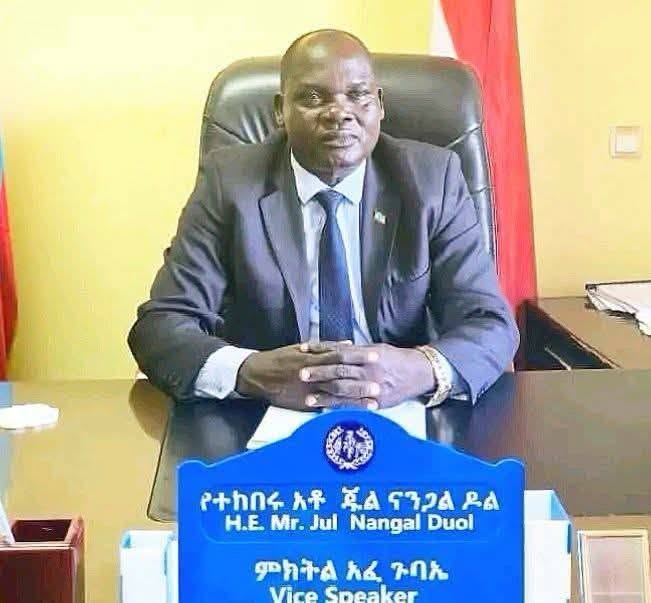
Ato Jul Nagal Dol
The Gambella Regional Council is preparing to convene its next regular assembly on August 17, 2026, with a broad agenda expected to place government performance, budget planning, legislation and institutional accountability at the centre of discussions.
Deputy Speaker Jul Nangal said the regional council will open its regular session as part of the sixth election period, fifth term and 10th regular assembly. The meeting is expected to continue for two consecutive days, during which council members will examine several agendas and take decisions on matters submitted for consideration.
The upcoming assembly is taking place at a significant moment for the regional administration, particularly as authorities continue to emphasize dialogue as a means of addressing political and institutional differences.
According to Deputy Speaker Jul, the session is expected to be different in the sense that the council will have an opportunity to engage in discussions aimed at resolving differences through dialogue. He stressed the importance of discussion and consultation at a time when the country is encouraging institutions and political actors to settle disagreements peacefully.
The emphasis on dialogue could make the forthcoming assembly an important platform for members of the regional council to raise concerns, exchange views and seek decisions on issues affecting the functioning of the regional administration.
Beyond political discussions, the council is expected to consider a series of reports from major government institutions. Executive offices are expected to present their 12-month performance reports covering the 2018 Ethiopian fiscal year.
The Regional Supreme Court is also expected to submit its annual performance report to the council. In addition, the Regional Auditor General’s Office and the Regional Council Office are expected to present their respective reports for review.
These reports are expected to give council members an opportunity to examine how regional institutions performed during the previous fiscal year, including the implementation of planned activities and the use of public resources.
Following the presentation of the reports, the council is expected to deliberate on them before deciding whether to approve the documents.
The assembly will also turn its attention toward the next fiscal year. Regional executive institutions are expected to present plans for the 2019 Ethiopian fiscal year, with the council expected to discuss and approve the proposed plans.
Budget planning is likely to be another major issue during the session. The council is expected to consider the proposed fiscal-year budget, implementation plans and requests for additional budget allocations.
The additional budget proposal could become an important area of discussion because council members are expected to examine the justification and priorities behind any additional financial requirements before reaching a decision.
Several draft proclamations are also expected to be tabled during the assembly. The proposed legislation will be presented to council members for discussion, review and possible approval.
The council is therefore expected to play both a legislative and oversight role during the session, reviewing the performance of government institutions while also considering plans and financial requirements for the coming fiscal year.
The timing of the meeting also places the regional council at the centre of a wider sequence of government assemblies planned across Gambella.
Following the regional council meeting, the National Zones Council is scheduled to convene on August 21–22, 2026. The planned meetings will subsequently move to the local level, with Gambella City Council and Itang Special Woreda Council expected to hold their sessions on August 25–26, 2026.
Other districts are also expected to organize their own council meetings in accordance with the authority granted to them under the constitution.
The series of meetings is expected to provide different levels of government with an opportunity to assess previous performance, debate current challenges and establish priorities for the coming fiscal period.
For the regional council, however, the immediate focus will remain on the two-day assembly beginning August 17.
The council’s consideration of annual performance reports will provide an opportunity to assess whether government institutions have fulfilled the responsibilities and plans assigned to them during the previous fiscal year.
At the same time, the consideration of the new fiscal-year plans and budget will determine the direction of regional government activities in the period ahead.
The expected legislative agenda could also result in new decisions affecting the administration and functioning of the region.
The assembly may therefore become more than a routine institutional meeting, particularly given the emphasis placed by the deputy speaker on dialogue and resolving differences through discussion.
Council members are expected to debate the agendas before reaching decisions, making the conduct of the discussions and the decisions that emerge from the session important indicators of the direction of regional governance.
The assembly will also provide a formal setting for representatives to raise questions concerning government performance, institutional accountability, financial planning and legislative proposals.
With several major institutions expected to report to the council, attention is likely to focus on the substance of those reports and the responses they receive from council members.
The proposed 2019 fiscal-year budget and additional budget request are similarly expected to attract close scrutiny because financial decisions determine the resources available for implementing government programmes and development priorities.
The presentation of draft proclamations will add another important dimension to the session, allowing council members to debate proposed legal measures before deciding whether they should be adopted.
The broader schedule of council meetings that follows the regional assembly also suggests a period of intensified institutional activity across Gambella.
The National Zones Council, Gambella City Council and Itang Special Woreda Council are all expected to conduct their respective meetings shortly after the regional assembly, while other districts are expected to organize their sessions within their constitutional mandates.
Taken together, the meetings are expected to create a chain of discussions and decisions from the regional level down to local administrations.
For Gambella’s regional council, the immediate challenge will be to turn the upcoming assembly into a productive forum for accountability, planning, legislation and dialogue.
As the council prepares to begin its 10th regular assembly, the main issues before members are expected to include government performance reports, the 2019 fiscal-year plan, the proposed budget, additional budget requirements, draft proclamations and other regional matters.
The session will therefore provide a significant opportunity for council members to scrutinize the work of regional institutions while also determining priorities for the next fiscal year.
The emphasis on resolving differences through dialogue could further shape the character of the meeting, particularly if council members use the assembly to openly discuss outstanding concerns and seek institutional solutions.
The outcome of the session will ultimately depend on the decisions reached by the council after the agendas are presented and debated.
What is clear, however, is that the August assembly is expected to address a wide range of issues extending from institutional performance and financial planning to legislation and political dialogue.
The subsequent meetings of the National Zones Council, Gambella City Council and Itang Special Woreda Council will then carry the process forward at different levels of administration.
The coming weeks are therefore expected to be an active period for council deliberations across Gambella, with decisions from the various assemblies potentially shaping government planning and implementation in the period ahead.