


Church prayers, peace conferences, and repeated visits by federal authorities to Gambella have all been well-intentioned efforts. However, they have not
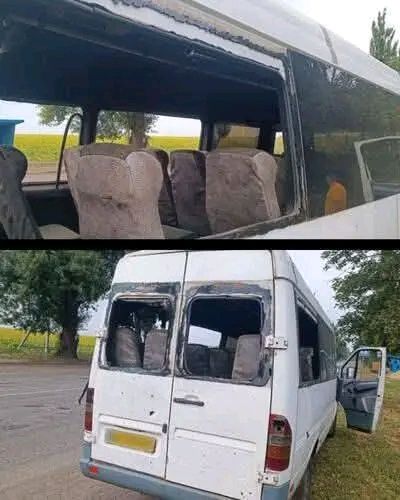
Another bus Attack in Abol where two Abesha have died
yet brought the lasting peace that the region urgently needs.
For more than six years, Gambella has experienced persistent instability, with many lives lost and communities deeply affected. Both the federal government and local stakeholders have made significant attempts to restore calm. Community leaders, religious figures, and youth groups have come together in various forums to promote reconciliation and unity.
Despite these efforts, the violence has continued.
This is not due to a lack of commitment or goodwill. On the contrary, many Gambellians have demonstrated a strong desire for peace. However, repeated cycles of violence suggest that gatherings and symbolic efforts alone are not enough to address the deeper challenges facing the region.
While prayers are offered and dialogues are held, criminal acts persist, and communities continue to suffer. This raises an urgent need to look beyond temporary measures and examine the underlying factors that allow violence to continue.
Security forces, including members of the ENDF have been deployed across affected areas with the aim of restoring order and protecting civilians. Their presence reflects the seriousness of the situation and the government’s recognition of the need for stability.
However, for many residents, these measures have not translated into a sustained sense of safety. Violence has continued, and communities remain vulnerable. This has led to growing concern that the current approach, while necessary, is not sufficient on its own to deter those responsible for attacks or to prevent further escalation.
Some community members have raised allegations that local authorities have, at times, failed to act decisively against perpetrators, or have not consistently enforced the rule of law. There are also claims that public resources have been misused during certain incidents of violence. For example, past attacks in areas such as Itang Special Woreda have been cited in local accounts as cases where vehicles associated with government institutions were reportedly used.
Whether these allegations are substantiated or not, their persistence highlights a deeper issue: a lack of trust in institutions meant to provide protection and justice. When communities believe that violence is not being addressed impartially, it reinforces fear and fuels cycles of retaliation.
Addressing these perceptions is just as important as addressing the violence itself. Without credible investigations, transparency, and accountability, even well-intentioned security efforts risk being viewed with suspicion rather than confidence.
Further concerns have been raised regarding specific incidents in Itang Special Woreda, including violence reported last year in areas such as Mazuria of Tharpaam. According to accounts from local residents, these killings resulted in significant loss of life, including civilians and business people from different communities.
Within these accounts are serious allegations that regional authorities may have had prior knowledge of the attacks or failed to take preventive action. Some also claim that public resources were used in ways that enabled armed groups to carry out operations. These claims represent a grave breach of public trust.
Equally troubling to many residents is the perception that, in the aftermath of such incidents, there has been limited accountability. Reports from community members suggest that arrests have been inconsistent or absent, and that security responses have not always been viewed as neutral. In some cases, there are claims that federal forces, including the ENDF did not act in ways that reassured all affected communities.
It is essential to emphasize that these allegations require independent investigation and verification. However, their persistence underscores a critical challenge: without transparent accountability and equal protection under the law, public confidence in institutions will continue to erode, making lasting peace even more difficult to achieve.
In the aftermath of repeated incidents, some residents have expressed deep frustration with what they perceive as an inadequate or uneven response from both regional leadership and security forces. There is a growing sentiment among sections of the community that the scale of suffering has not always been met with the urgency or empathy it demands.
Concerns have also been raised about whether security operations in the region, including those involving the members of the ENDF, have consistently maintained the level of neutrality expected in such a sensitive context. While these perceptions vary across communities, they point to a broader issue of trust that cannot be ignored.
Allegations of misconduct, including claims of misuse of public resources or undue influence over security responses, have circulated widely. These are serious matters that require thorough, independent investigation. Without clear accountability and transparency, such concerns—whether substantiated or not—risk further undermining confidence in both regional authorities and federal institutions.
Concerns were also raised regarding the role of the Ethiopian National Defense Force (ENDF) in past incidents in Gambella. Some participants at the conference expressed the view that this is not the first time the ENDF has been perceived as either inactive or insufficiently protective during episodes of violence affecting Nuer communities.
Reference was made to an incident during the administration of Omot Ujulu, where it is alleged that security forces were involved in a violent operation in a locality identified as Makhot. According to these accounts, several civilians lost their lives during the event. Such claims continue to shape perceptions of mistrust toward security institutions among affected communities.
These concerns highlight the importance of accountability, transparency, and impartiality in the actions of national security forces. For peace to be sustainable, communities must have confidence that security institutions will protect all citizens equally and respond appropriately to threats, regardless of ethnic or political identity.
Another major concern raised is the lack of accountability following past incidents of violence. Participants noted that, in some cases, there have been no visible investigations or compensation for families who lost loved ones. This absence of justice has deepened grievances and reinforced perceptions that certain communities are not equally protected under the law.
Some speakers also expressed dissatisfaction with past regional leadership, including during the time of Omot Ujulu, arguing that responses to violence were inadequate and, at times, perceived as biased. These perceptions—whether fully verified or not—have contributed to a broader climate of mistrust between communities and authorities.
A particularly serious concern voiced at the conference was the belief among some Nuer participants that different actors—including local authorities, armed groups, and elements of the national security forces—are not acting impartially. These perceptions have led to fears that peace processes may not succeed if underlying issues of fairness, protection, and accountability are not addressed.
Recent tensions in areas such as Makhot Kebele in Itang Special Woreda were also highlighted. Disputes over shared resources—such as grazing land and water points—have reportedly triggered clashes between communities. Access to these resources is critical for livelihoods, and when disagreements are not managed fairly, they can quickly escalate into violence.
Some participants raised concerns about how security forces have responded in such situations. For example, there were claims that restrictions were placed on one group’s access to certain areas without equivalent enforcement on others. Whether accurate or not, such perceptions reinforce the belief that institutions are not neutral, which undermines confidence in both security arrangements and peace initiatives.
The federal government has repeatedly sent delegates to Gambella in an effort to support peace initiatives. Yet, many residents feel that these efforts have not fully reflected the reality on the ground. Some community members express concern that reports of progress may not accurately capture the ongoing violence and insecurity in the region.
Incidents such as the attack on an ambulance and a government vehicle in Abol on December 10, which resulted in the deaths of ten people, highlight the continuing risks faced by civilians. Local accounts suggest that follow-up investigations and arrests have sometimes been delayed or inconsistent, further fueling frustration. Reports also circulate of high-profile cases, including the killing of a university lecturer, Duoth Choat, shortly after a change in leadership, where the response was seen as insufficient by parts of the community.
These perceptions underline a critical point: when communities feel that leaders are unable or unwilling to enforce the law impartially, trust in institutions erodes, and some residents may feel compelled to take justice into their own hands. This cycle of fear and retaliation only deepens instability.
What Gambella needs is leadership committed to fair and consistent enforcement of the law, where accountability is based on the nature of the crime rather than the identity of the perpetrators. Residents point to past examples of leaders who acted decisively against criminal behavior, regardless of community affiliation, as models for what effective governance can achieve. Strengthening impartial law enforcement and ensuring that all communities are protected equally are essential steps toward breaking the cycle of violence and building lasting peace.
This is a pivotal moment for the Nuer to take leadership and restore stability in Gambella. The region already possesses highly capable police officers and Liyu Haile (Special Forces) who could restore law and order in just one week.
Yet, divisions created by the Anyuak leadership have left law enforcement officers feeling unsafe in all areas, as the current authorities do not recognize them as serving the entire population of Gambella. Immediate Nuer leadership is essential to unify security forces and prevent further chaos.
A Nuer leader would ensure the safety of all communities, including the Anyuak, while fully deploying the Special Forces and Gambella Police, forces that Alemitu refuses to use effectively against ongoing violence. With proper leadership, there would be no need for federal troops or ENDF intervention; Gambella has the manpower, expertise, and capacity to secure itself if allowed to act decisively.
Yet a small but dangerous faction of the Anyuak community, determined to see a Gambella without Nuer, continues to destabilize the region. Backed by state government support, they are actively undermining safety and unity. The current administration has no vision, no plan, and no capacity to bring peace. Holding meetings with pastors and federal agencies—as in last week’s gathering of over 700 people—is mere window dressing. Violence can and will erupt again in less than a week if real action is not taken.
What Gambella urgently needs is a complete change of leadership:
New administrators with the authority and determination to reform corrupt judges, strengthen law enforcement, and redirect resources to vulnerable communities, particularly those targeted by attacks, to end the cycle of violence and restore lasting peace.
The Gambella Parliament must pass a law imposing life imprisonment without parole for any ethnic-based killing. Once offenders are properly convicted and tried, an agreement should be made with the Addis Ababa government to ensure these criminals serve their sentences fully until death. This is how a new administration can restore true peace in Gambella.
At present, no Anyuak leader has the capacity or resolve to enforce such justice. A Nuer president, however, would act decisively, holding accountable even Nuer perpetrators who commit crimes.
Unfortunately, the Anyuak leadership is either complicit in protecting their criminals or paralyzed by fear of reprisals. A Nuer leader has nothing to fear: the Nuer do not attack the Anyuak without cause. Any deaths of Anyuak at the hands of Nuer occur only when law and order break down, not by deliberate intent. With decisive leadership, proper enforcement, and clear laws, Gambella can finally achieve the peace and security its people deserve.
This article was written by Pam Chuol Joack, a Gambella Vision contributor and an expert in Gambella affairs.