


Violence in Gambella Region is not simply the result of a shortage of law-enforcement officers. Instead, it reflects deeper systemic problems within the region’s political and security structures.
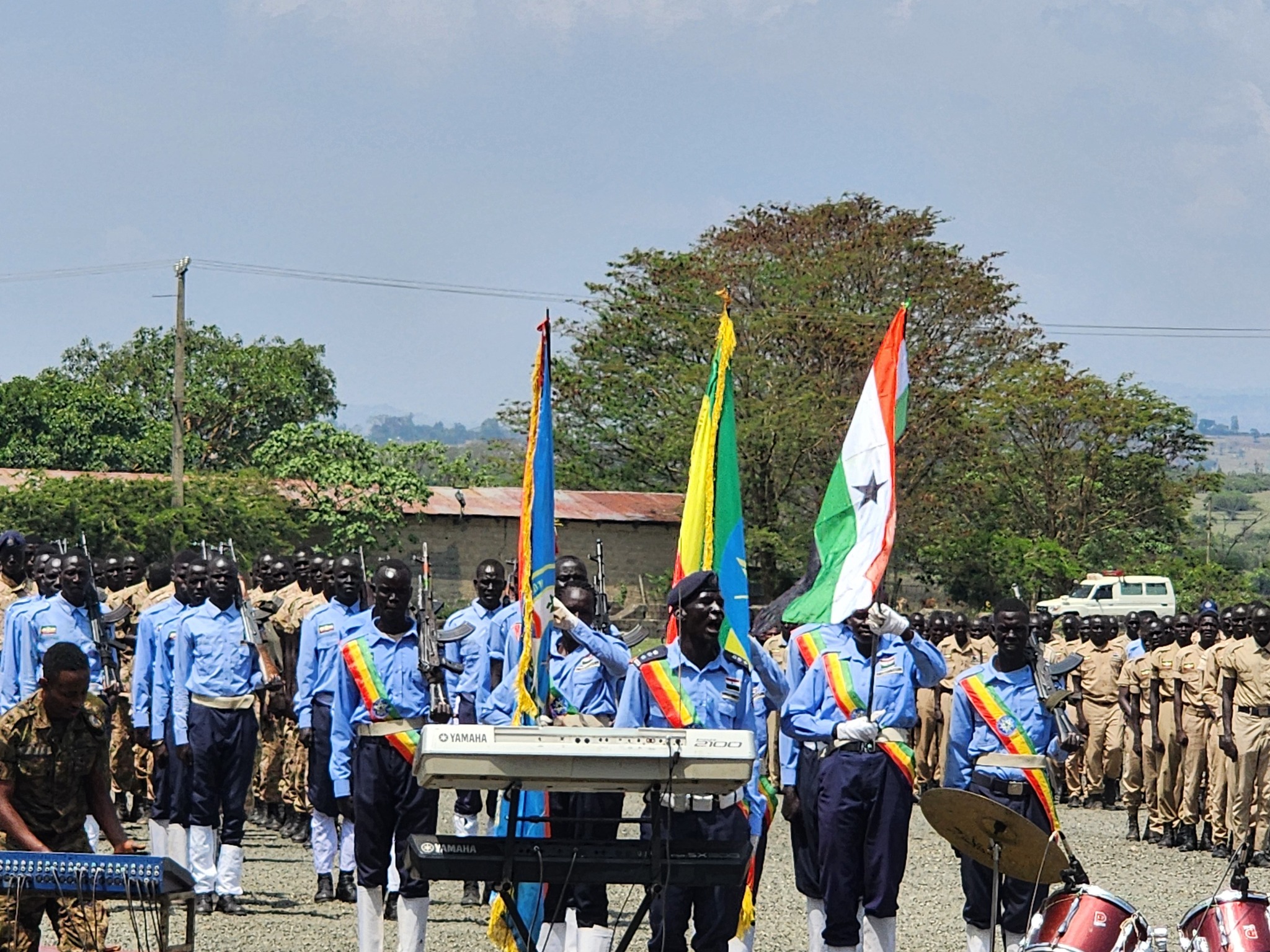
Police without Mandate is like tea without Sugar
Gambella has many brave young men and women serving in law enforcement, including members of the police and special forces. Despite their presence, gun violence in the region remains among the highest in the country. This raises an important question: why does such violence persist even with a large security presence?
One of the most troubling issues is that some of the perpetrators of organized violence are reportedly members of the police and special forces themselves. In several cases, officers have allegedly turned their weapons against their colleagues. There have been incidents where Nuer police officers, particularly in Itang, were killed by fellow officers while on duty.
Critics argue that the regional government, which has long been under leadership from the Anyuak community, has not taken sufficient action to stop these incidents. In some cases, government resources have allegedly been used in ways that worsened the situation. For example, during the attack on Iller Kebele, it was reported that government vehicles were used to transport armed fighters to Nuer areas.
One example frequently cited involves a pickup truck belonging to former Deputy Police Commissioner Mulugeta Rut. The vehicle was reportedly used under the orders of then Police Commissioner Senay Okwor. Although the trip was presented as official police work, the vehicle allegedly traveled as far as Puldeng while transporting armed fighters.
Many residents, including members of the Nuer community, recognize and appreciate the efforts of the federal government to train police and maintain law and order in the region. However, according to critics, the problem does not lie with ordinary police officers. Instead, they argue that the issue lies within the system above them—where decisions are made that may encourage violence or allow offenders to escape accountability.
Police officers and special-force members are often family providers who rely on their jobs to support their households. In a normal policing environment, few would knowingly risk their careers by participating in crimes. Yet some observers believe that when the system appears to tolerate or protect such actions, accountability becomes rare.
In a well-functioning security system, incidents of violence would lead to immediate investigations: identifying who committed the crime, why it happened, and how similar incidents could be prevented. Critics say this level of accountability is largely absent in Gambella. Although there are police commissioners and detectives on the payroll, many residents feel that only a small portion of their duties are actually carried out.
For example, on March 7, 2018, armed attackers reportedly entered Makhot Kebele in the Itang Special Woreda and opened fire on individuals riding a motorbike. One person was seriously injured while the other escaped without harm. Investigating such incidents has become extremely difficult because of growing divisions between communities.
In the town of Itang, which is home to both Nuer and Anyuak residents, tensions have forced many Nuer residents to leave certain neighborhoods. Nuer police officers are now stationed in Tharpaam and often cannot safely enter Anyuak areas to investigate crimes. This situation makes proper law enforcement nearly impossible.
All of this points to a broader institutional failure. Observers say the security crisis reflects problems at the highest levels of governance rather than simply weaknesses among frontline police officers.
According to critics, the situation was already serious under former regional president Omot Ojulu, but they argue that conditions have worsened under the current leadership of Alemitu Umod.
For security to improve in Gambella, many believe that reforms must occur from the top down. This would include strengthening accountability within the police force, addressing negligence among officials, and reforming the judicial system to ensure justice is applied fairly.
Without meaningful reform, critics warn that violence may continue and development in the region—including infrastructure such as roads—will remain limited.
This article was written by Pel Kun Chol, a native of Gambella from Lare Woreda .